
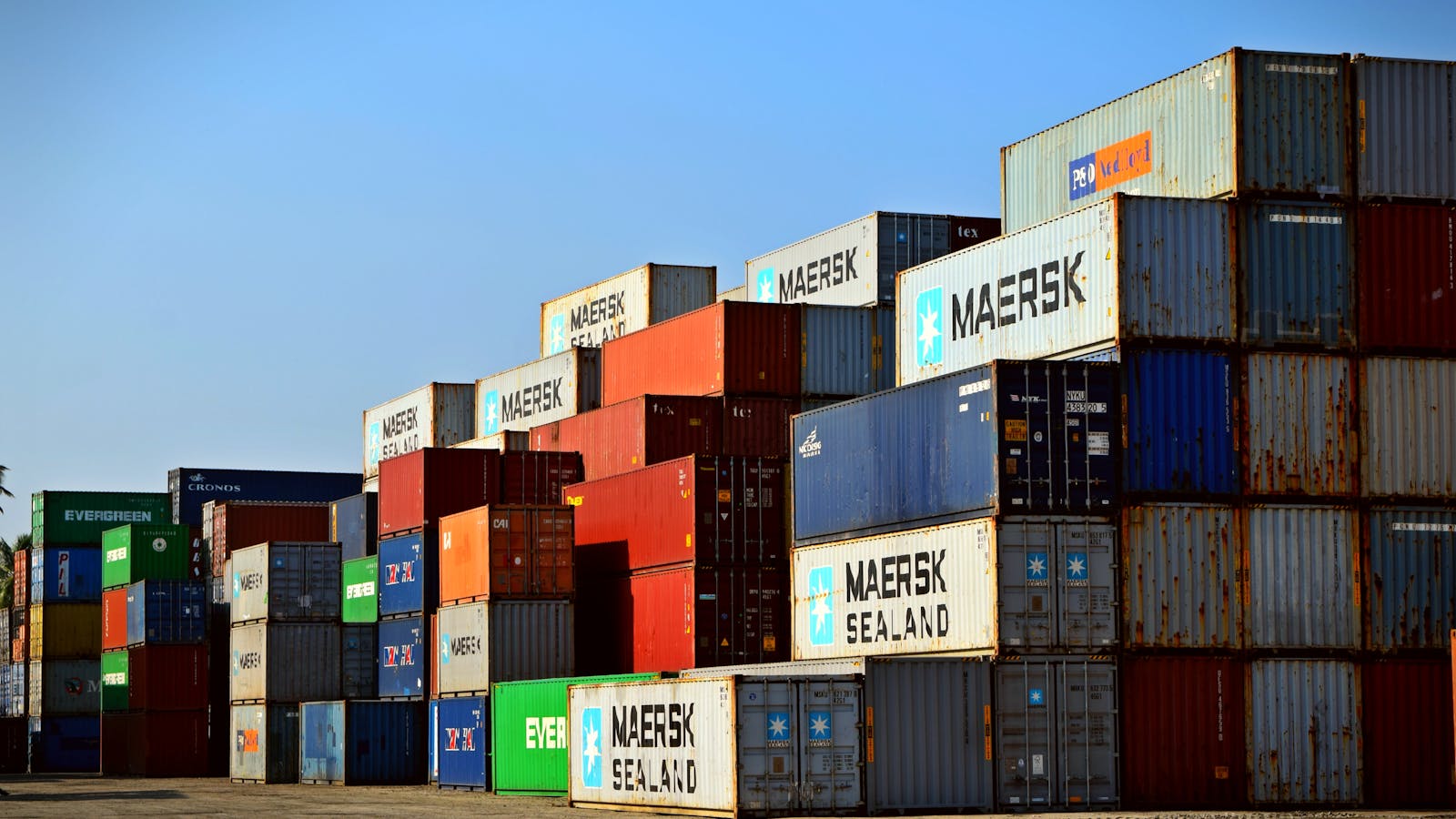
Sixty-five percent. That is the share of cargo damage claims the TT Club, one of the largest insurers of the global container supply chain, traces back to poor packing and lashing inside cargo transport units. Not the crate. Not the ship. The way the cargo was tied down. Across five years of claims data (around 7,000 claims each worth more than $10,000, totalling roughly $425 million), TT Club found that faulty packing alone accounted for almost $41 million in payouts. That is the headline number. The real cost, once you add the downstream damage to equipment, the missed project windows, and the broken customer relationships, is much larger. TT Club’s own estimate for packing-related cargo losses worldwide sits near $6 billion a year. And yet, in most heavy cargo shipments I have seen out of UAE ports, the crate gets weeks of engineering attention and the lashing gets fifteen minutes on the quayside. That is backwards.
What Your Cargo Actually Feels At Sea
Walk past a shipyard and the first thing you notice is how still everything looks. Ships sit in the water. Containers sit on ships. Cargo sits inside containers. It gives you the impression that, once the load is loaded, it is also at rest. It isn’t. The moment the ship leaves port, every object on board, including your 40-tonne pressure vessel or 80-tonne skid-mounted generator, starts to experience acceleration in three axes at once. The numbers are published in the TIS-GDV load guidelines that underpin the CTU Code jointly issued by IMO, the International Labour Organization, and the UN Economic Commission for Europe. For an unrestricted ocean-going voyage, the design accelerations are 0.4 g longitudinal, 0.8 g transverse, and ±0.8 g vertical on top of the 1 g of gravity. Read the vertical number twice. ±0.8 g on top of gravity means a 40-tonne load effectively weighs 72 tonnes at one end of a heave cycle and 8 tonnes at the other. Eight tonnes. Friction between the cargo and the floor, which is what most shippers quietly rely on to do half the securing work, collapses at the light end of that cycle. The transverse number is worse. 0.8 g sideways means that on a heavy roll, a 40-tonne load is trying to slide with 32 tonnes of force. The steel box around it was not designed to absorb that. The lashings were, if they were designed at all. Wind force stacks on top of this. So does parametric rolling, which is the condition that took MSC Zoe in the early hours of 2 January 2019 and dumped 345 containers into the North Sea in one sequence before losing more hours later. The Dutch and German investigators who pulled the incident apart found that the loading and securing had been done in line with the rules of the day. The rules were the problem. They had not kept up with the acceleration profiles of ultra-large container vessels. If that is true for standardised containers on a ULCV, consider what it means for a one-off breakbulk piece in a flat rack, where the shipper is responsible for the lashing plan and the carrier’s contract stops at "reasonable care."
Why The Crate Gets Engineered And The Lashing Gets Improvised
Engineered crates are satisfying to specify. You can calculate wall thickness, run a stack test, sign off on a bill of materials. There is a drawing. There is a cost line item. Procurement can compare three vendors. Lashing is harder to specify on paper. It involves forces that change every second, friction coefficients that change with humidity, angles that depend on where the tie-down points ended up on the crate, and materials whose rated strength drops if anyone twists them on the way through a ratchet. So lashing gets treated as the thing you do after the crate is built. Someone hands the rigger a bundle of 5-tonne polyester webbing straps and a box of D-rings and says "make it tight." That is not engineering. That is hope. The same shipment will have a twenty-page crate specification and a lashing plan that exists only as a mental picture in the rigger’s head. When the claim lands six weeks later in a surveyor’s report from Jebel Ali or Khor Fakkan, nobody is surprised that the crate held up and the tie-downs did not. The same defensive thinking that produces over-engineered crates also produces under-engineered lashing, because over-building wood is auditable and over-calculating lashing angles is not.
Five Lashing Mistakes I See More Often Than I Should
These are not exotic failure modes. They are the ones that keep showing up, voyage after voyage, on heavy cargo moving out of UAE ports. First is the wrong lashing angle. EN 12195-1, the European calculation standard most heavy cargo shippers reference, is explicit: lashings should be applied at a vertical angle between 30° and 60° against the bed. Below 30°, you are mostly resisting slide and fighting almost nothing on the vertical axis. Above 60°, you are pressing the cargo down and barely resisting slide. A lashing applied at 20° instead of 40° can lose half its effective holding power. The strap did not fail. The geometry did. Almost every time I have seen a cargo crew strap a skid, the angle was driven by where the D-rings happened to be welded, not by a calculation. Second is webbing that is already half-dead. Polyester webbing is cheap, which is the problem. A 50 AED strap with a cut, a burn from a welding spark, or a melted edge from sitting against hot steel in a Sharjah summer has already lost some of its rated strength. Use it twice, and it loses more. One twist in the webbing path through the ratchet can strip up to 50% of the rated lashing capacity. That is half your margin, gone, because whoever threaded the strap did not bother to lay it flat. Third is friction assumptions that ignore the weather. The CTU Code allows a friction coefficient based on the material pair at the cargo/floor interface. Wood on wood is cited as 0.20 to 0.50 dry. Wet, it drops to 0.20 to 0.25. The only thing that changed was humidity. If your lashing calculation did not build in a wet-condition derating, the cargo was already moving in the spreadsheet before it moved in real life. Fourth is too few tie-down points in the wrong places. A 60-tonne piece with four lashings is not secured. It is decorated. The CSS Code (IMO’s Code of Safe Practice for Cargo Stowage and Securing) and its Annex 13, updated in 2020 via MSC.1/Circ.1623, require that the securing arrangement be designed against the inertia forces in each direction separately, and those forces scale with mass. Lashings applied high on a tall crate generate long moment arms and can lift rather than secure. Lashings applied to a painted surface with no designated lash point are slipping before the ship has left the berth. Fifth is direct and indirect lashing, confused. Direct lashings, where the strap runs from a fixed point on the cargo to a fixed point on the deck and takes the load in tension, are fundamentally different from indirect (top-over) lashings, which work by pressing the cargo down and relying on friction. Shippers routinely use indirect lashings on heavy cargo and expect them to perform like direct lashings. They do not. Indirect lashing is a friction amplifier. If the friction is already low, the amplifier has nothing to work with. For heavy, odd-shaped oilfield equipment with a high centre of gravity, direct lashings with calculated angles and engineered attachment points are almost always the correct answer. Top-over pretension on the same piece is a category error.
What Proper Lashing Engineering Actually Looks Like
It starts with a document. Before anything is packed, the shipment has a written lashing and securing plan that identifies the mass and centre of gravity of every piece, the voyage route and the design accelerations that apply to it, the friction coefficient at the cargo/floor interface with a wet-condition derating, the number, type, angle, and rated capacity of every lashing component, the attachment points on both the cargo and the CTU with their rated load, and a residual safety margin after all derating is applied. This is what EN 12195-1 and CSS Code Annex 13 give you the mathematics for. The calculation is not optional, and it is not a senior rigger’s judgment call. It is the same kind of engineering exercise as the crate design, and it deserves the same level of attention. Lashing equipment then gets selected to the calculation, not the other way round. Webbing gets inspected and retired on a logged schedule. Chain and wire rope lashings, which are the right choice for really heavy pieces, get certified and load-tested. Every attachment point on the cargo has an identified rated load. The plan is signed by someone whose name is on the paperwork if the cargo moves. That is what engineered lashing means. Anything less is someone’s best guess with a ratchet in their hand.
Why This Matters More In The UAE Than People Admit
A lot of UAE heavy cargo moves in a way that makes the lashing problem worse. Shipments out of Hamriyah, Jebel Ali, and Khalifa Port often go to project sites in Iraq, Saudi Arabia, Oman, East Africa, or across an ocean to the Gulf of Mexico. The voyages are not short. The sea states in the Arabian Sea during the southwest monsoon, the western Indian Ocean, and the Atlantic are not forgiving. Oilfield equipment is heavy and expensive, and it usually sits tall on its skid. That is the worst possible combination for a lashing specified by eye. The cargo is also unforgiving of a delayed arrival. A shifted pressure vessel does not just dent the shell. It delays a drilling programme, a commissioning window, a rig-up schedule. The real cost of a damaged oilfield shipment is almost never the cargo value. It is the standby day rates on the crew and equipment waiting on site. The route risk is changing too. In the World Shipping Council’s 2025 update, 576 containers were lost at sea in 2024, up from 221 in 2023. Around 200 of those came from a single corridor: the rerouting around the Cape of Good Hope after Red Sea disruptions. The rerouting changed the sea conditions the cargo was exposed to. The lashing plans that were fine for a Suez voyage were not fine for a Cape voyage. The cargo did not change. The route changed. That is the generalisable lesson. Lashing plans are voyage-specific. Treating them as a standard operation done the same way every time is how you end up contributing to those statistics.
The Question To Ask Your Packer
When you brief a packer on a heavy cargo shipment, whether it is a generator, a pressure vessel, a transformer, or a mud pump skid, there is one question that will tell you almost everything you need to know about whether your cargo will arrive intact. It is not "can you build the crate?" It is "can I see the lashing calculation?" If the answer is a written document referencing EN 12195-1 or CSS Code Annex 13, with forces, angles, friction factors, and a stated safety margin, you are dealing with an engineer. If the answer is "don’t worry, we always do it the same way," you are dealing with a hope strategy, and your cargo is part of the 65%. Heavy cargo lashing should be specified, calculated, certified, and signed. The same way you would never accept a crate built without a drawing, you should never accept a lashing plan built without a calculation. The cargo always wins an argument with improvised securing. The only question is whether you are the one paying for the fight.
UAE heavy cargo and oilfield exporters are shipping through sea states and voyage routes that punish lashing shortcuts more aggressively than they did even two years ago. The 65% damage statistic is not a rounding error. It is the single largest category of preventable cargo loss in the global container trade, and it starts with treating lashing as an engineered output rather than a last-minute task. Ficus Pax International builds packing and lashing as a single engineered workflow for heavy cargo and oilfield shipments out of the UAE, because any other approach is an argument the cargo always wins.